
According to the International Energy Agency (IEA), HVAC systems account for a significant share of building energy consumption, making ducting efficiency a critical factor in overall building performance. Beyond air-handling equipment, the material used for ductwork directly influences energy efficiency, durability, and long-term maintenance costs.
Al-Zn steel HVAC ducting has gained significant preference because of its excellent combination of thermal efficiency and corrosion resistance. Its aluminium-zinc coating helps resist humidity, condensation, and environmental contaminants, making it an ideal solution for commercial, industrial, healthcare, and infrastructure applications.
Manaksia Coated Metals & Industries Ltd., one of India’s leading Al-Zn steel sheet and coil manufacturers, supplies high-quality Al-Zn-coated steel products engineered to deliver reliable long-term performance in HVAC ducting applications.
Driven by the growing demand for energy-efficient buildings and lower lifecycle costs, the HVAC industry has witnessed increasing adoption of Al-Zn steel for ductwork. Its key advantages include:
HVAC ducts form the distribution network for conditioned air throughout a building. When ductwork deteriorates, airflow efficiency declines, indoor air quality may be affected, and the overall performance of the heating and cooling system is compromised.
Corroded or damaged ductwork can result in:
Industry estimates indicate that poorly maintained duct systems can lose up to 20–30% of energy due to airflow leakage in certain commercial buildings. Selecting durable and efficient ductwork materials is therefore essential for reducing long-term operating costs. This is where Al-Zn steel offers significant advantages for HVAC ducting.
Energy efficiency has become a defining metric in modern building design. Green building certifications, sustainability goals, and rising energy costs are encouraging developers to optimise every component of HVAC systems.
One of the key advantages of Al-Zn steel is its excellent heat reflectivity.
Compared with conventional coated surfaces, its aluminium-rich coating reflects radiant heat more effectively, reducing both heat gain and heat loss through the ductwork. As a result, conditioned air remains closer to its intended temperature throughout the distribution system.
Reduced Energy Consumption
Improved thermal performance reduces the load on HVAC equipment, lowering overall energy consumption.
Improved Temperature Control
Maintaining consistent air temperature enhances occupant comfort while helping HVAC systems operate at their intended performance levels.
Lower Operational Expenses
Energy savings accumulate throughout the building’s operational life, reducing long-term operating costs.
For commercial buildings operating HVAC systems around the clock, even modest improvements in thermal performance can generate significant cost savings over time.
Corrosion is one of the leading causes of HVAC duct deterioration.
Traditional duct materials are exposed to moisture, humidity, coastal air, pollutants, and industrial chemicals, all of which gradually degrade the ductwork. As corrosion develops, airflow efficiency declines while maintenance requirements increase.
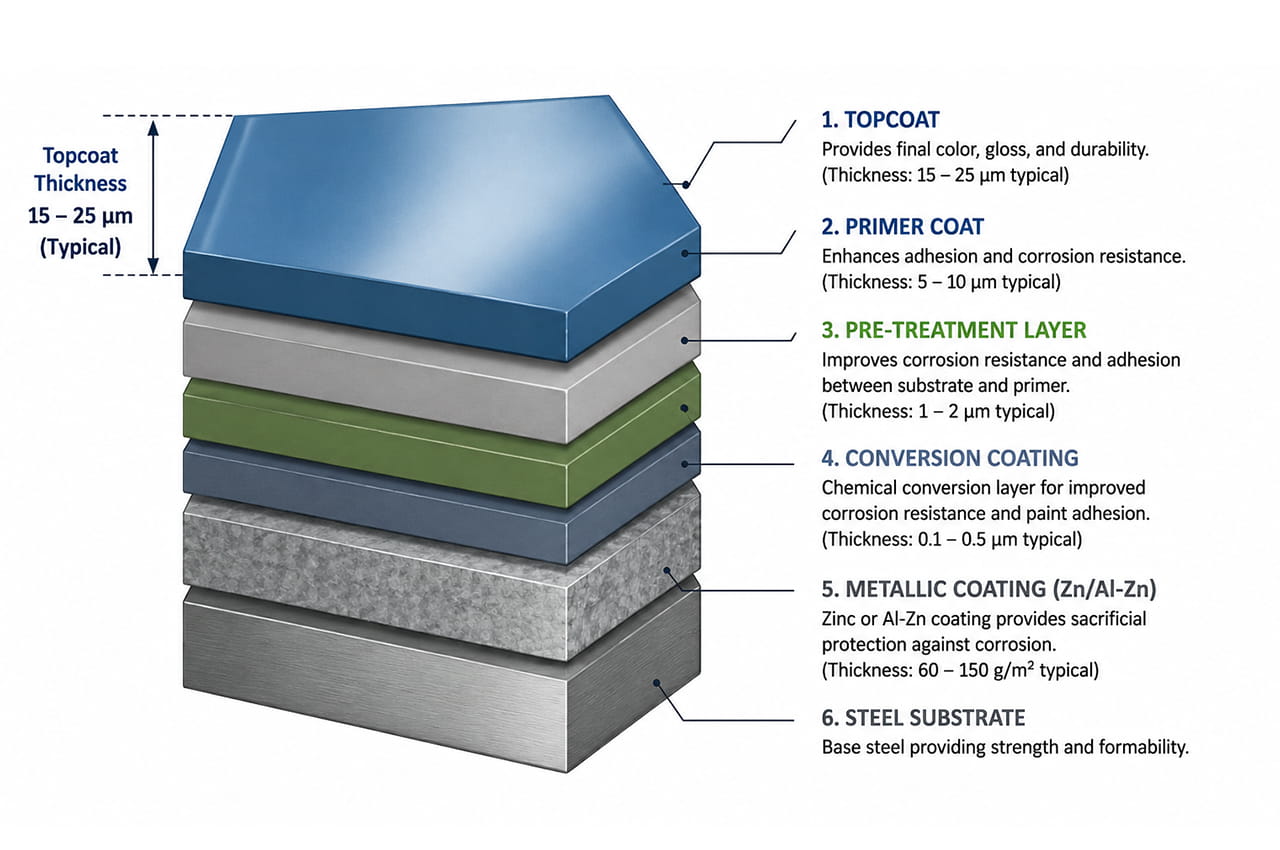
Al-Zn steel addresses this challenge through its dual protective coating.
The aluminium component forms a durable barrier that protects the steel substrate from environmental exposure. If the coating is scratched or damaged, the zinc layer corrodes preferentially, protecting the underlying steel from corrosion.
Together, these two protection mechanisms provide exceptional corrosion resistance, making Al-Zn steel particularly suitable for demanding environments.
For infrastructure projects, healthcare facilities, manufacturing plants, and coastal developments, this translates into longer service life, improved reliability, and lower maintenance expenditure.
Although the Al-Zn coating does not significantly alter the thermal conductivity of the steel substrate, its highly reflective surface helps minimise radiant heat transfer. This improves the overall thermal efficiency of HVAC ducting by reducing unwanted heat gain and heat loss. This results in several important operational benefits:
While the coating does not fundamentally change the steel’s thermal conductivity, its reflective properties significantly improve the overall thermal performance of HVAC ducting.
Al-Zn steel supports sustainable building practices by offering:
These characteristics make Al-Zn steel an ideal material for projects focused on sustainability, lifecycle value, and long-term operational efficiency.
As HVAC systems continue to evolve to meet higher standards of efficiency and durability, material selection has become increasingly important. With its excellent thermal efficiency, superior corrosion resistance, and long service life, Al-Zn steel has emerged as an ideal material for modern HVAC ducting applications.
Through its high-quality Al-Zn-coated steel solutions, Manaksia Coated Metals & Industries Ltd. continues to support the industry’s demand for reliable, energy-efficient, and durable HVAC materials engineered for long-term performance.
Answer: Al-Zn steel combines superior corrosion protection, heat reflectivity, durability, and low maintenance requirements, making it ideal for long-term HVAC ducting performance.
Answer: Its aluminium-rich coating reflects radiant heat, reducing thermal losses, maintaining conditioned air temperatures, and helping HVAC equipment operate more efficiently.
Answer: Corrosion can cause airflow restrictions, energy losses, maintenance issues, and premature replacements, reducing overall system reliability and operational efficiency.
Answer: Yes. Al-Zn steel generally offers longer service life, stronger environmental protection, improved reflectivity, and better performance in challenging conditions.
Answer: Its dual aluminium-zinc coating provides enhanced protection against moisture, pollutants, and corrosive elements commonly found in coastal and industrial locations.
Answer: Manaksia Coated Metals & Industries Ltd. manufactures high-quality Al-Zn coated steel products designed to deliver durability, efficiency, and reliable performance in HVAC systems.