
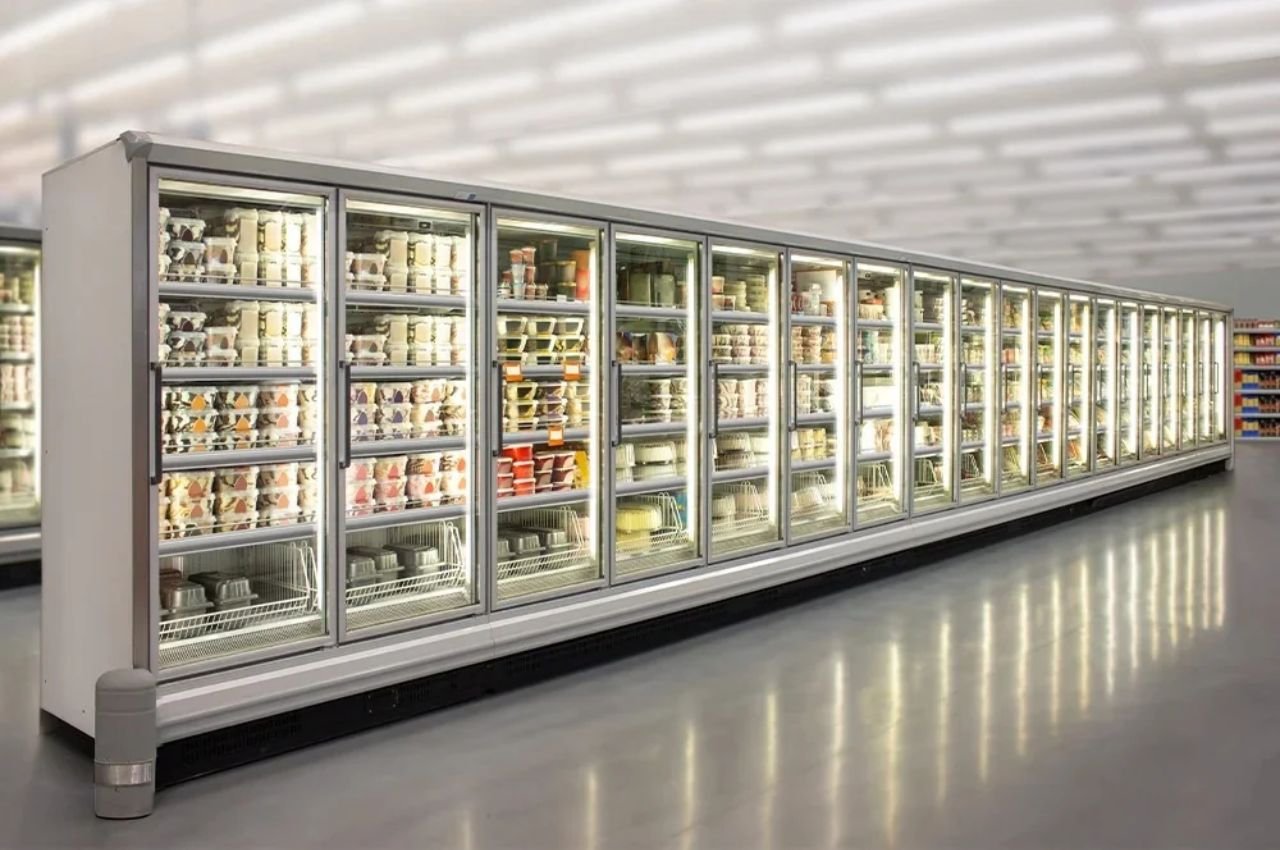
Deep freezer cabinets require materials that combine durability, dimensional accuracy and a consistent surface finish. From outer casings and side panels to doors and other formed components, the quality of the steel used in manufacturing influences both the appearance of the finished appliance and the efficiency of production.
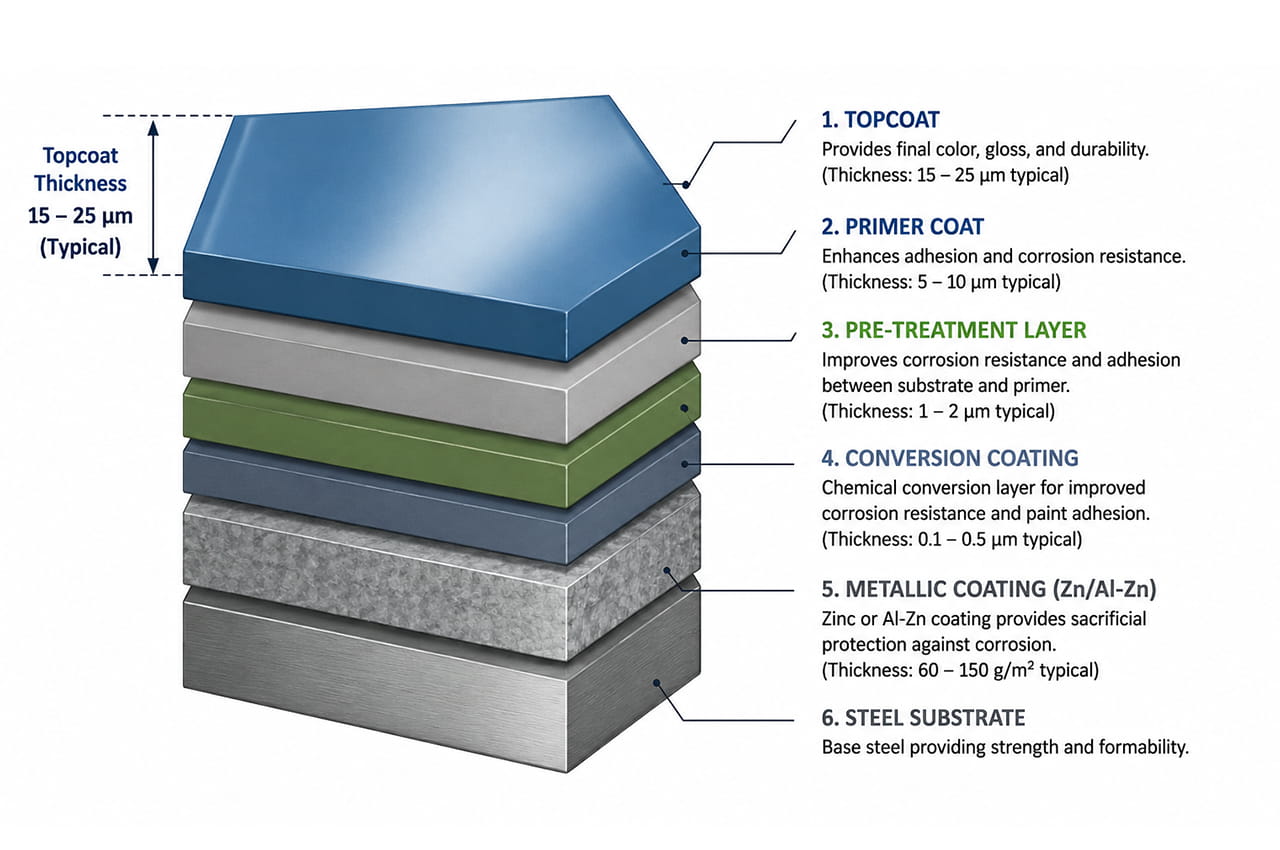
Pre-painted steel for deep freezer cabinets provides a factory-applied coating system that combines the mechanical properties of steel with a protective and decorative finish. However, the performance of the finished panels depends on more than the presence of a paint coating.
Factors such as substrate quality, steel thickness, coating adhesion, surface uniformity and formability influence how the material performs during cutting, bending, profiling and assembly.
For deep freezer and refrigerator cabinet manufacturers, selecting coils with suitable specifications and consistent quality can help achieve reliable fabrication, uniform finishes and better control over production outcomes.
The painted surface of a freezer cabinet contributes to its visual appearance while providing a protective layer against everyday environmental exposure. Coating quality influences colour consistency, surface smoothness, adhesion and resistance to damage during fabrication and use.
For manufacturers producing large volumes of appliance panels, maintaining these properties across different coils and production batches is particularly important.
Deep freezer cabinets often comprise multiple visible components, including doors, side panels and outer casings, which may be manufactured separately. Differences in colour, gloss or surface texture can become noticeable when these components are assembled into a finished appliance.
Consistent pre-painted steel quality helps manufacturers maintain a uniform appearance across panels and production batches. This is particularly important for appliance manufacturers producing multiple models or maintaining standardised finishes across large production volumes.
The visual quality of a finished panel depends on the condition of the steel substrate and the uniformity of the applied coating. Surface imperfections, variations in paint application and irregularities in gloss or texture can affect the appearance of exposed cabinet surfaces.
These differences may be particularly noticeable on large, flat panels where light reflects across the painted surface. Suitable surface preparation and controlled coating processes can help achieve consistent finishes and reduce visible defects in the finished components.
Freezer cabinet panels undergo several manufacturing stages, including cutting, forming, handling and assembly. During these processes, the painted surface may be exposed to mechanical contact, bending stresses and abrasion.
Good coating adhesion and suitable flexibility help reduce the risk of cracking, peeling or coating separation during fabrication. The coating system should also provide appropriate resistance to scratching, cleaning agents and environmental exposure based on the intended application.
However, the performance of the finished surface depends on the complete coating system, processing conditions and handling practices.
Formability describes a material’s ability to undergo shaping operations without developing unacceptable defects. In deep freezer manufacturing, steel sheets may be cut, bent, folded or profiled to produce cabinet walls, door components, edges and other structural features.
The forming performance of pre-painted steel depends on the mechanical properties of the substrate, coating flexibility, sheet thickness and the geometry of the required component.
Cabinet manufacturing frequently involves bending operations to create corners, folded edges, door frames and reinforcing profiles. The selected steel grade must provide sufficient formability for the intended bending requirements.
Inappropriate material selection or unsuitable forming conditions can lead to defects such as cracking, wrinkling, springback-related dimensional variations or coating damage.
Choosing pre-painted steel with suitable mechanical properties and coating flexibility can help manufacturers achieve more consistent component dimensions. The forming process must also account for bend radius, tooling conditions and material thickness.
Steel thickness influences panel stiffness, forming behaviour and dimensional accuracy. Variations in sheet thickness can affect bending performance, tooling adjustments and the fit of components during assembly.
For refrigerator and deep freezer cabinets, consistent thickness helps manufacturers maintain more predictable forming results across production runs. However, thickness selection should also consider panel dimensions, structural requirements, supporting features and the intended cabinet design.
A thicker sheet is not automatically the most efficient option for every component. The appropriate specification depends on the mechanical requirements of the application.
Pre-painted steel must accommodate the deformation associated with manufacturing operations. During bending and profiling, the coating experiences tensile and compressive stresses along with the underlying steel.
If the coating system lacks sufficient flexibility for the intended forming operation, defects such as cracking or loss of adhesion may occur. Manufacturers should therefore consider both substrate formability and coating performance when selecting materials for components requiring complex bends or profiles.
Appropriate forming parameters and tooling are equally important for preserving the quality of the painted surface.
Consistent material quality supports predictable processing conditions and reduces unnecessary variations during manufacturing.
For appliance manufacturers operating high-volume production lines, differences in steel thickness, surface quality or mechanical properties can affect production consistency.
Surface defects, coating damage and dimensional inconsistencies may result in rejected components or additional processing. Selecting coils with suitable specifications and consistent properties can help reduce the likelihood of such problems.
However, material quality must be supported by appropriate handling, fabrication and quality-control practices.
Uniform steel thickness and mechanical properties help manufacturers maintain stable forming parameters across production batches. Similarly, consistent coating quality can reduce variations in the appearance of finished components.
These characteristics can support smoother production planning and minimise the need for repeated adjustments caused by material inconsistencies.
Material defects and fabrication-related damage can contribute to wastage during panel manufacturing. Consistent coil quality, combined with efficient cutting layouts and appropriate forming practices, can support better material utilisation.
For large-scale appliance manufacturers, improvements in production consistency can contribute to more efficient operations and better control over manufacturing costs.
Selecting suitable material requires evaluating the steel substrate and the coating system together. Several factors deserve attention.
The steel grade should provide the strength, ductility and forming characteristics required for the intended cabinet components.
Manufacturers should consider the complexity of forming operations, expected dimensional tolerances and structural requirements.
The selected paint system should provide suitable adhesion, flexibility, surface appearance and resistance to relevant environmental conditions.
Colour, gloss, coating thickness and surface uniformity should be evaluated against the manufacturer’s product specifications.
Consistent base metal thickness supports predictable fabrication and component fit.
Manufacturers should specify suitable thickness tolerances based on their production processes and cabinet designs.
The corrosion resistance of pre-painted steel depends on the metallic coating, paint system, fabrication quality and conditions of exposure.
For freezer cabinets, manufacturers should consider potential contact with moisture, cleaning agents and other conditions associated with the intended operating environment. Cut edges, formed areas and damaged surfaces may require particular attention depending on the application.
Material selection should account for cutting, bending, profiling, fastening and assembly requirements. Coating flexibility, substrate properties and forming parameters must be compatible to minimise surface damage and dimensional defects.
Manufacturers should also consider supplier specifications, quality consistency and the relevant testing requirements for their applications.
Even when suitable pre-painted steel is selected, processing and handling practices influence the quality of the finished components. Several precautions can help preserve material performance.
Handling and storage: Protect coils and sheets from unnecessary abrasion, moisture exposure and surface contamination before processing.
Cutting and profiling: Use appropriate equipment and processing parameters to minimise burrs, surface damage and dimensional variations.
Bending and forming: Follow suitable bend requirements and tooling practices to reduce the risk of coating cracks or deformation defects.
Surface protection: Consider protective films and appropriate handling arrangements where required to minimise damage during manufacturing.
Quality inspection: Check surface appearance, coating condition and component dimensions at relevant stages of production.
These practices complement material quality and help manufacturers maintain consistent standards throughout fabrication and assembly.
Manaksia Coated Metals & Industries Limited (MCMIL) manufactures pre-painted steel products for applications where surface appearance, corrosion protection and fabrication performance are important.
For appliance manufacturers, selecting the appropriate steel grade, coating system, thickness and surface finish is essential to achieving the required balance of visual quality and manufacturing performance.
Pre-painted steel with suitable material properties and consistent coating quality can support the production of freezer cabinet components that meet defined appearance and fabrication requirements.
By combining appropriate material specifications with controlled manufacturing practices, appliance producers can work towards greater consistency in finished panel quality.
The quality of pre-painted steel coils influences several important aspects of deep freezer cabinet manufacturing, from the appearance of painted surfaces to forming performance and dimensional accuracy.
Coating adhesion, colour consistency, substrate properties, steel thickness and surface uniformity all contribute to the quality of finished panels. These characteristics must be evaluated alongside cabinet design, fabrication methods and intended service conditions.
For deep freezer and refrigerator cabinet manufacturers, selecting pre-painted steel with suitable specifications and consistent quality can help reduce production variations, improve panel finishes and support efficient manufacturing operations.
Answer: Coating quality influences colour uniformity, surface smoothness, paint adhesion, scratch resistance and the overall appearance of finished panels.
Answer: Suitable steel formability and coating flexibility help pre-painted steel sheets undergo bending and profiling while minimising the risk of cracks, wrinkles and coating damage.
Answer: Manufacturers should evaluate coating adhesion, flexibility, thickness, gloss retention and resistance to scratches and corrosion.
Answer: Consistent coil quality supports accurate panel dimensions, uniform finishes and smoother fabrication of refrigerator cabinets.
Answer: Consistent steel thickness, coating quality and formability help reduce material wastage, panel rejection and repeated fabrication adjustments.
Answer: They should assess substrate quality, thickness tolerance, coating adhesion, surface finish, formability and corrosion resistance to meet application requirements.