
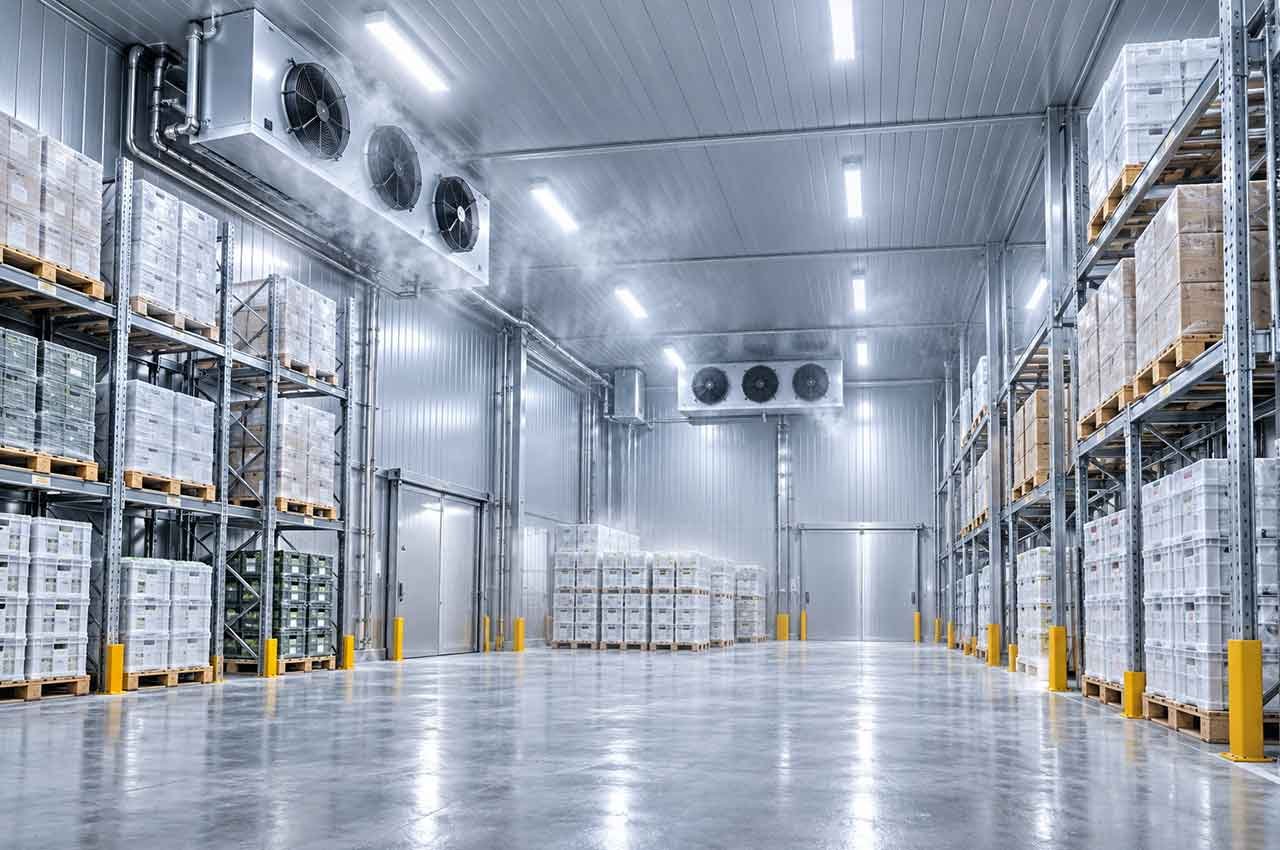
Cold storage facilities play an important role in preserving perishable products such as food, medicines, and agricultural produce. Maintaining controlled temperatures is essential for preserving product quality. At the same time, the materials used to construct these facilities must be able to withstand demanding conditions involving moisture, condensation, and temperature variations. This makes appropriate material selection an important consideration when building a refrigerated warehouse.
Alu-Zinc Steel is widely used in construction and industrial applications because of its corrosion resistance and durability. Its aluminium-zinc coating provides additional protection to the underlying steel. However, when considering Alu-Zinc Steel for cold storage applications, it is important to evaluate not only low-temperature conditions but also humidity, condensation, installation practices, and the specific service environment.
Corrosion is an important consideration in cold storage facilities. Temperature differences between refrigerated interiors and warmer external environments can cause condensation to form on surfaces. Moisture, cleaning processes, and exposure to chemicals can also affect the long-term performance of construction materials. Over time, these factors may contribute to the deterioration of steel components, particularly where protective coatings have been damaged.
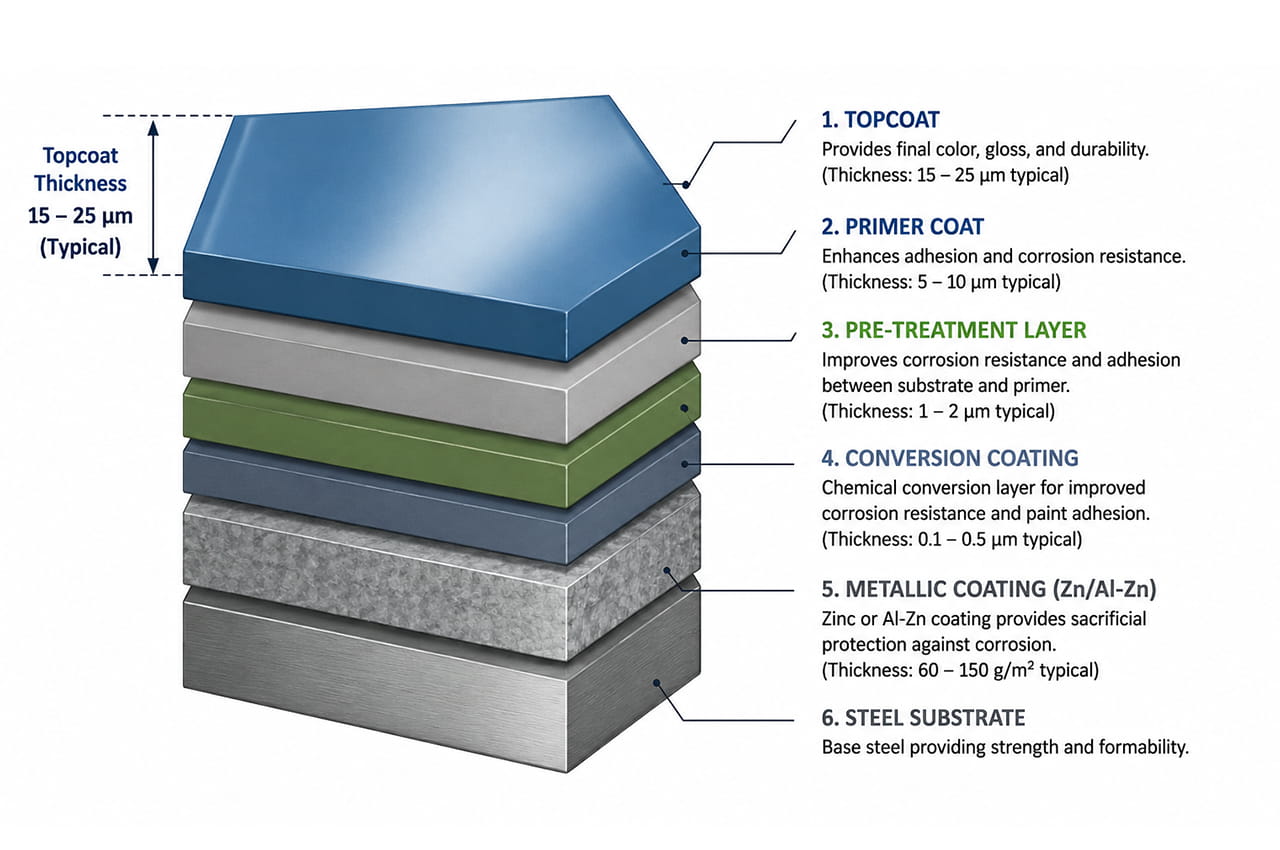
Alu-Zinc Steel has a metallic coating consisting of aluminium, zinc and silicon. The coating combines the barrier protection associated with aluminium with the sacrificial protection provided by zinc.
The aluminium-rich component of the coating provides barrier protection, while zinc contributes sacrificial protection, particularly at exposed or damaged areas. These characteristics make Alu-Zinc Steel suitable for construction applications where corrosion resistance is an important consideration.
In cold storage facilities, corrosion-resistant materials can contribute to the long-term durability of roofing, wall cladding, and other suitable building components. Alu-Zinc Steel can help reduce the risk of corrosion when appropriately specified, installed, and maintained.
However, the coating does not make the material completely immune to corrosion. In refrigerated warehouses, condensation may occur around joints, cut edges, fasteners, and other vulnerable areas. If moisture remains trapped around these areas for extended periods, the risk of corrosion may increase, particularly where the protective coating has been damaged.
Appropriate insulation, moisture barriers, and effective moisture management are therefore important for supporting the long-term performance of Alu-Zinc Steel in cold storage facilities.
Coating mass is another important specification to consider, as it can influence corrosion protection. The appropriate coating specification, however, should be selected according to the environmental and service conditions. Factors such as humidity, cleaning methods, and exposure to corrosive substances should therefore be considered when selecting Alu-Zinc Steel for a refrigerated warehouse.
When selecting materials for cold storage facilities, low-temperature performance is an important consideration. Depending on the type of products being stored, a refrigerated warehouse may operate under chilled conditions or at freezing temperatures.
Steel is widely used as a construction material in cold environments. However, its mechanical performance depends on factors such as steel grade, material thickness, structural design, loading conditions, and operating temperature. Some steel grades can experience reduced impact toughness at low temperatures, making appropriate grade selection particularly important for components exposed to dynamic or impact loading.
At low temperatures, the aluminium-zinc coating can continue to provide corrosion protection, provided the material and component are appropriately specified for the intended service conditions. However, the corrosion resistance provided by the coating and the low-temperature mechanical suitability of the underlying steel should be considered separately.
The applicable temperature range and suitability for specific service environments should therefore be verified against the relevant product specifications and manufacturer recommendations.
Another important consideration in cold storage facilities is thermal movement. Temperature differences between refrigerated interiors and warmer external environments can cause construction materials to expand and contract. Appropriate fastening systems, joint design, and installation practices should therefore accommodate thermal movement while helping protect the integrity of the coating and building envelope.
Manaksia’s Alu-Zinc Steel offers corrosion resistance and durability that can make it suitable for selected cold storage and refrigerated warehouse applications. Its aluminium-zinc coating provides additional protection to the underlying steel, helping components withstand demanding environmental conditions.
However, material selection alone does not determine long-term performance. The suitability of the underlying steel for low-temperature service depends on the selected steel grade and specific operating conditions. Appropriate insulation design, moisture control, coating specification, and installation practices are also important considerations.
When appropriately specified, installed, and maintained, Alu-Zinc Steel can contribute to the durability and long-term performance of cold storage facilities and refrigerated warehouses.
Answer: Condensation, humidity, cleaning chemicals, coating damage and installation quality can influence its durability in cold storage facilities.
Answer: Its aluminium-zinc coating provides corrosion resistance and durability for selected cold storage applications.
Answer: Yes, with suitable specifications and installation practices to accommodate thermal movement in a refrigerated warehouse.
Answer: Operating temperature, humidity, coating specification, steel grade and exposure to cleaning chemicals should be evaluated.
Answer: Proper insulation and vapour control help minimise condensation, supporting the durability of Alu-Zinc Steel components.
Answer: Yes, periodic inspections and timely repairs help identify coating damage and maintain long-term performance.