
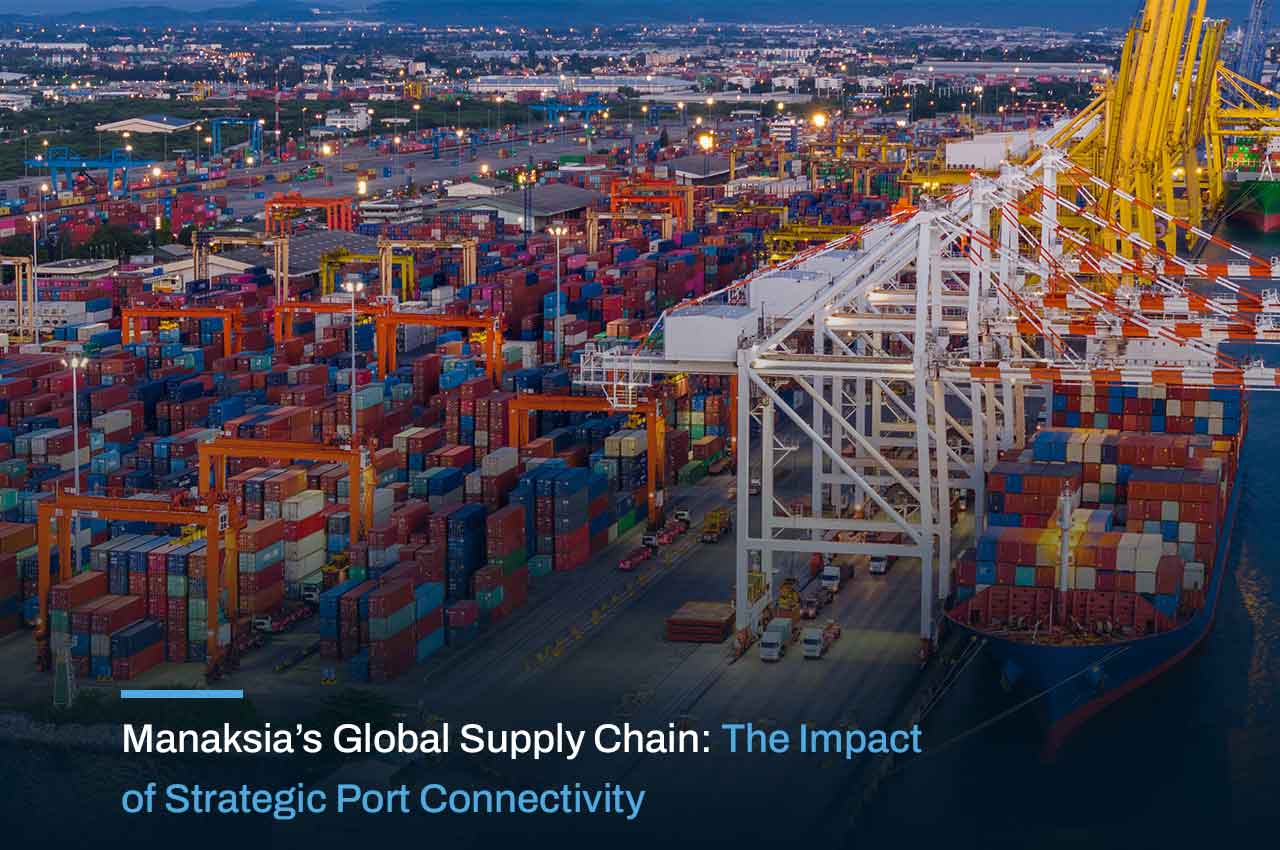
In today’s interconnected marketplace, a strong global supply chain is not just about production capacity; it is about precision, planning and powerful logistics. For an established exporter like Manaksia Coated Metals & Industries Limited (MCMIL), infrastructure and location play a defining role in maintaining its global footprint. With over 35 years of experience and a presence across India, Europe and Africa, our Dual-Port Access has become a cornerstone of its operational excellence.
From manufacturing premium coated steel products to serving global markets seamlessly, MCMIL’s strategic location near Kandla Port and Mundra Port gives it a decisive competitive edge.
In global commerce, geography is strategy. The proximity of a manufacturing unit to key ports significantly reduces transit time, transportation costs and logistical uncertainties. For companies engaged in exports, this is not merely convenient; it is transformational.
MCMIL’s advanced manufacturing plant in Kutch, Gujarat, is strategically positioned close to two of India’s most important commercial ports. This location enhances turnaround time, optimises freight movement, and ensures faster delivery to international markets.
In global trade, delays can impact contracts, customer trust and profitability. Being close to shipping hubs ensures quicker cargo handling, minimal inland transport, and streamlined documentation processes. For an exporter dealing with large volumes of galvanised and colour-coated steel coils and sheets, time efficiency directly translates to cost efficiency.
Moreover, global buyers today expect reliability and speed. Strategic port connectivity allows MCMIL to align with international supply chain expectations, meeting shipment deadlines without compromising product quality.
Location also supports scalability. As demand rises across different geographies, having a facility near major maritime gateways ensures that increased production can be efficiently dispatched without logistical bottlenecks. In essence, location is not just about where a plant is built; it is about how effectively it connects to the world.
The concept of Dual-Port Access offers more than convenience; it delivers a distinct strategic advantage. Operating near both Kandla Port and Mundra Port provides flexibility, resilience and enhanced trade efficiency.
1. Reduced Risk and Operational Flexibility
Dependence on a single port can create vulnerabilities due to congestion, weather disruptions or regulatory delays. Dual-Port Access ensures alternative routing options. If one port experiences delays, shipments can be redirected efficiently, maintaining delivery commitments and protecting customer relationships.
2. Faster Turnaround and Competitive Freight Rates
With two major ports within reach, MCMIL can select routes based on shipping schedules and freight economics. This flexibility often results in optimised logistics costs and improved export margins. In competitive international markets, cost efficiency strengthens pricing strategies without compromising profitability.
3. Stronger Global Market Connectivity
Mundra Port is one of India’s largest commercial ports with extensive global shipping routes, while Kandla Port has long served as a critical trade gateway. Access to both expands connectivity across Europe, Africa and other international markets. For a company serving diverse geographies, this ensures broader reach and consistent shipping frequency.
4. Enhanced Supply Chain Resilience
Modern global supply chains demand adaptability. Dual-Port access reinforces business continuity by preventing over-reliance on a single logistics channel. This strengthens the company’s ability to meet export timelines even during peak seasons or unforeseen disruptions.
5. Efficient Bulk Movement
MCMIL’s Kutch facility operates sophisticated Galvanising and Colour Coating lines with significant production capacities. Handling such volumes requires seamless bulk cargo movement. Proximity to two ports ensures faster container availability, quicker customs clearance, and smooth dispatch of large consignments.
A robust global supply chain is built on three pillars: manufacturing excellence, logistical strength and strategic foresight. MCMIL’s fully automated, high-precision production lines ensure premium-grade steel products, while its port connectivity strengthens distribution efficiency.
The synergy between production capacity and Dual-Port Access allows the company to operate as a dependable exporter. It reduces lead times, ensures predictable delivery schedules, and strengthens international partnerships.
Furthermore, the strategic advantage of this logistical positioning enhances India’s export competitiveness on a broader scale. By integrating infrastructure planning with operational strategy, MCMIL reinforces its position as a high-quality supplier capable of meeting global demand with speed and reliability.
In an era where supply chain disruptions can reshape industries overnight, strategic infrastructure planning becomes a powerful differentiator. For Manaksia, Dual-Port Access is not merely a logistical feature; it is a growth catalyst.
By leveraging its proximity to Kandla Port and Mundra Port, the company strengthens its global supply chain, enhances operational agility, and secures a sustainable strategic advantage in international trade.
As global markets continue to evolve, this integration of manufacturing excellence and port connectivity ensures that MCMIL remains a trusted exporter, efficient, resilient, and ready to serve the world.
A. Dual-Port Access refers to proximity to both Kandla and Mundra ports, enabling faster exports, reduced logistics risks, and improved global supply chain efficiency.
A. Being close to Kandla Port reduces inland transportation time and costs, ensuring quicker shipment processing and timely delivery to international customers.
A. It offers operational flexibility, alternative routing options, cost optimisation, and stronger resilience against port congestion or unexpected disruptions.
A. It ensures consistent shipment schedules, minimises delays, improves freight management, and enhances reliability for customers across international markets.
A. Mundra Port offers extensive global connectivity and high cargo handling capacity, helping exporters efficiently serve Europe, Africa, and other regions.
A. Efficient port connectivity lowers logistics costs, improves delivery timelines, and enhances customer trust, strengthening long-term competitiveness in global trade.